.jpg)
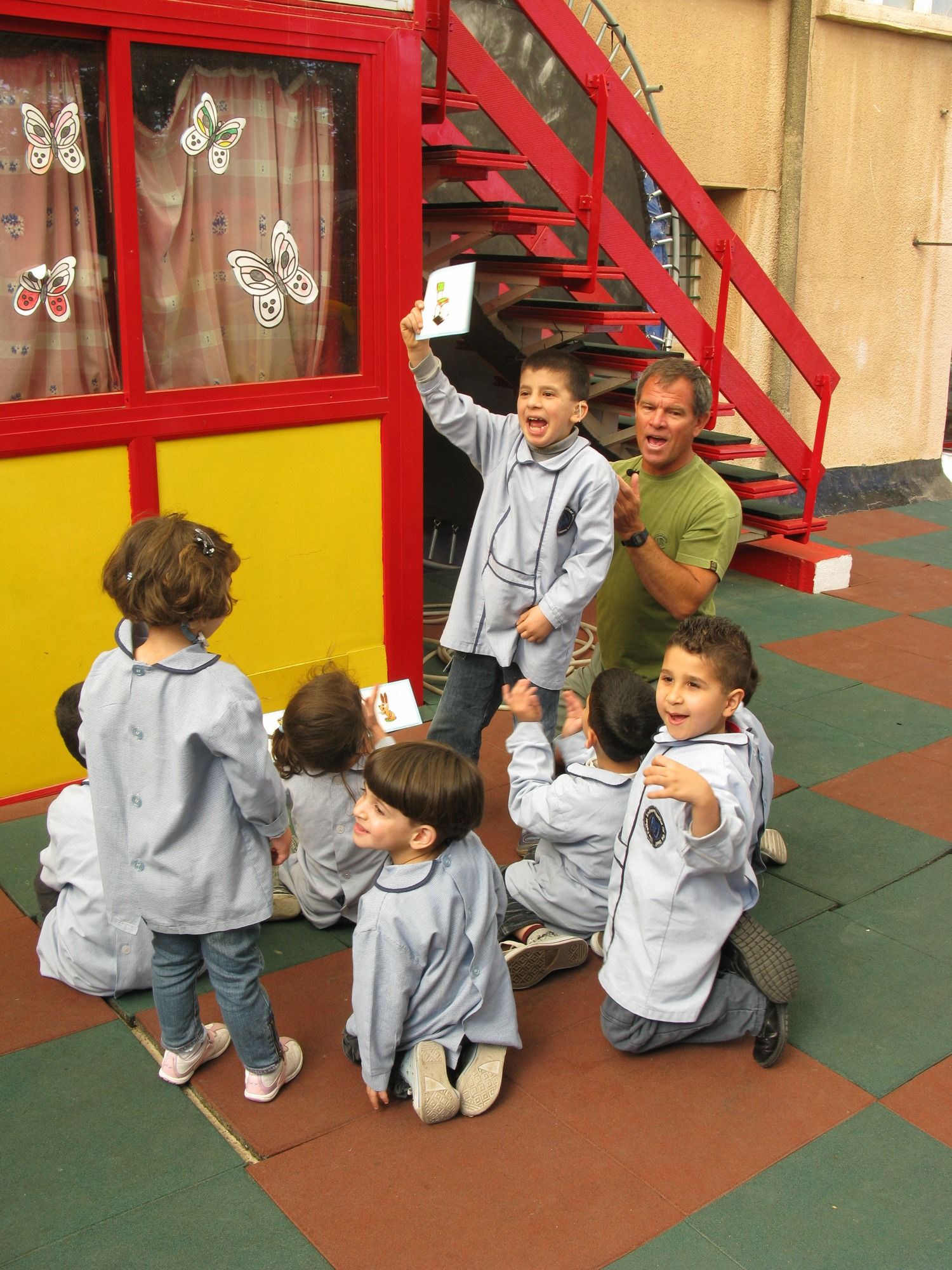
The beginning of THRASS.
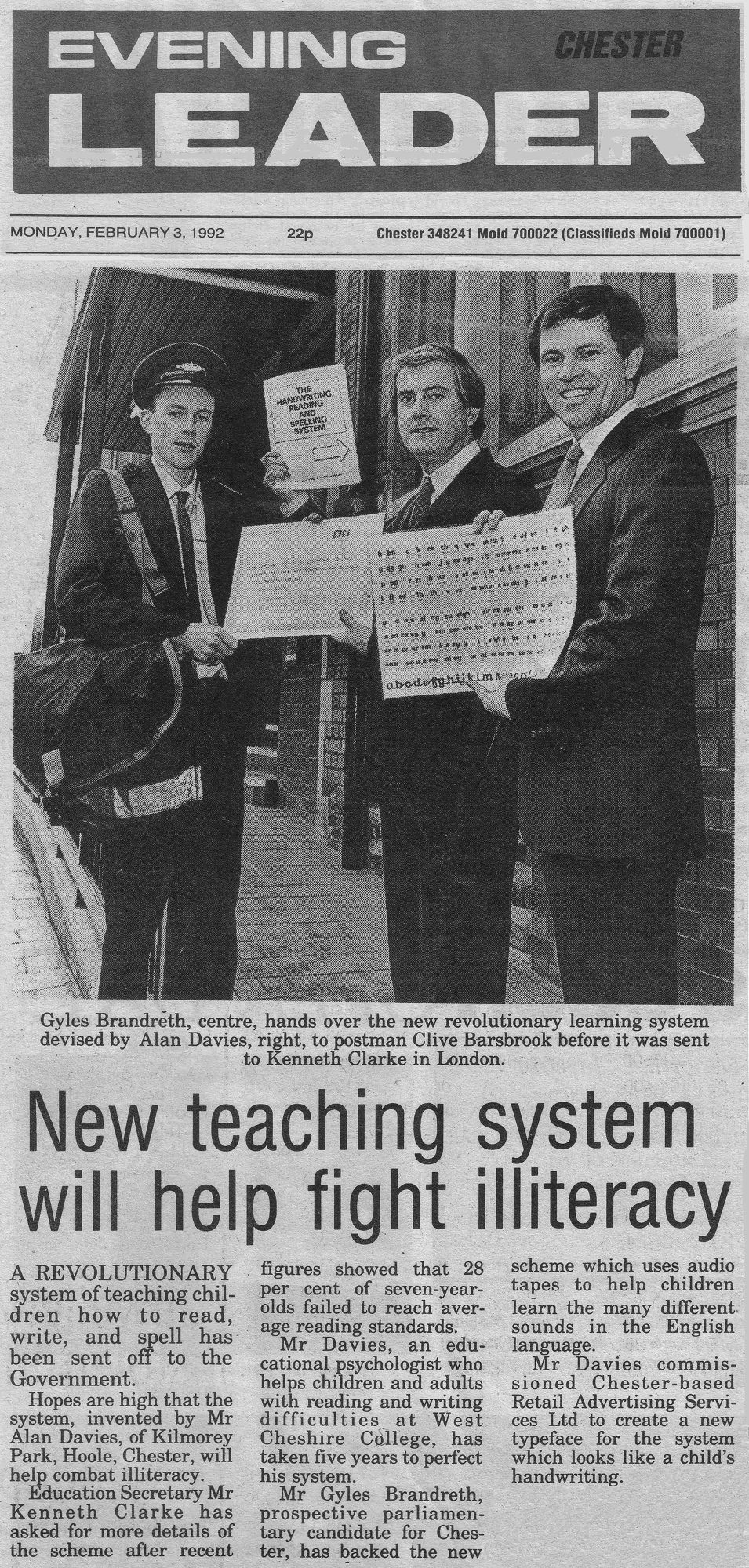
British educational psychologist Alan Davies began developing THRASS in 1989. The idea for its ‘sound boxes’ was first drawn in the sand during a beach holiday with his family. Alan wanted learners to see the ‘whole picture’ of English phonics, with the 44 speech sounds and their main spelling choices brought together on one chart. He trialled the early resources with children and adults of different ages and abilities and conducted thorough research before the first THRASS resources were published in England in 1992 and 1994.
Sharing knowledge with teachers.
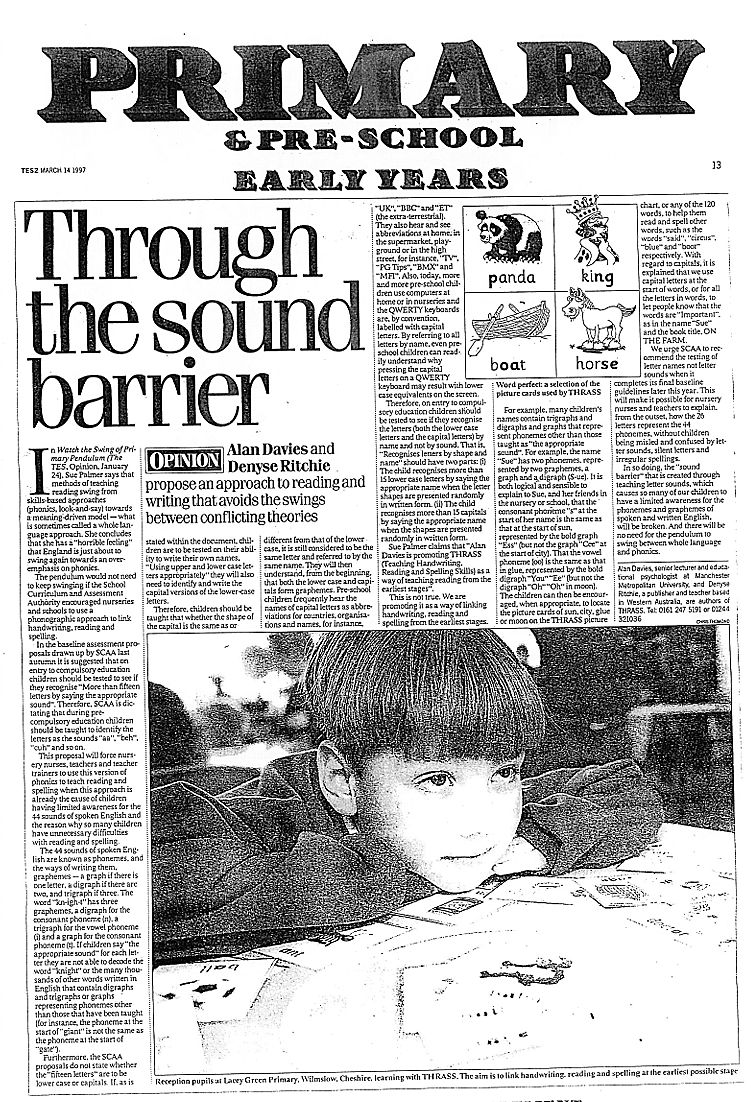
In 1995, Australian teacher and former education lecturer Denyse Ritchie encountered THRASS at the Birmingham Education Show while looking for a way to help her son, who was struggling to read. His progress prompted her to suggest working with Alan to adapt the programme for children and develop resources for schools. They collaborated on THRASS resource projects, both digital and printed, which would become the cornerstone of the globally recognised THRASS approach to education.

Denyse’s work extended to teacher education, with workshops across Australia helping teachers understand the relationships between spoken and written English and apply this knowledge in their classrooms. By November 1997, THRASS was reported to be in use in nearly 450 Western Australian schools.
Reaching more classrooms.
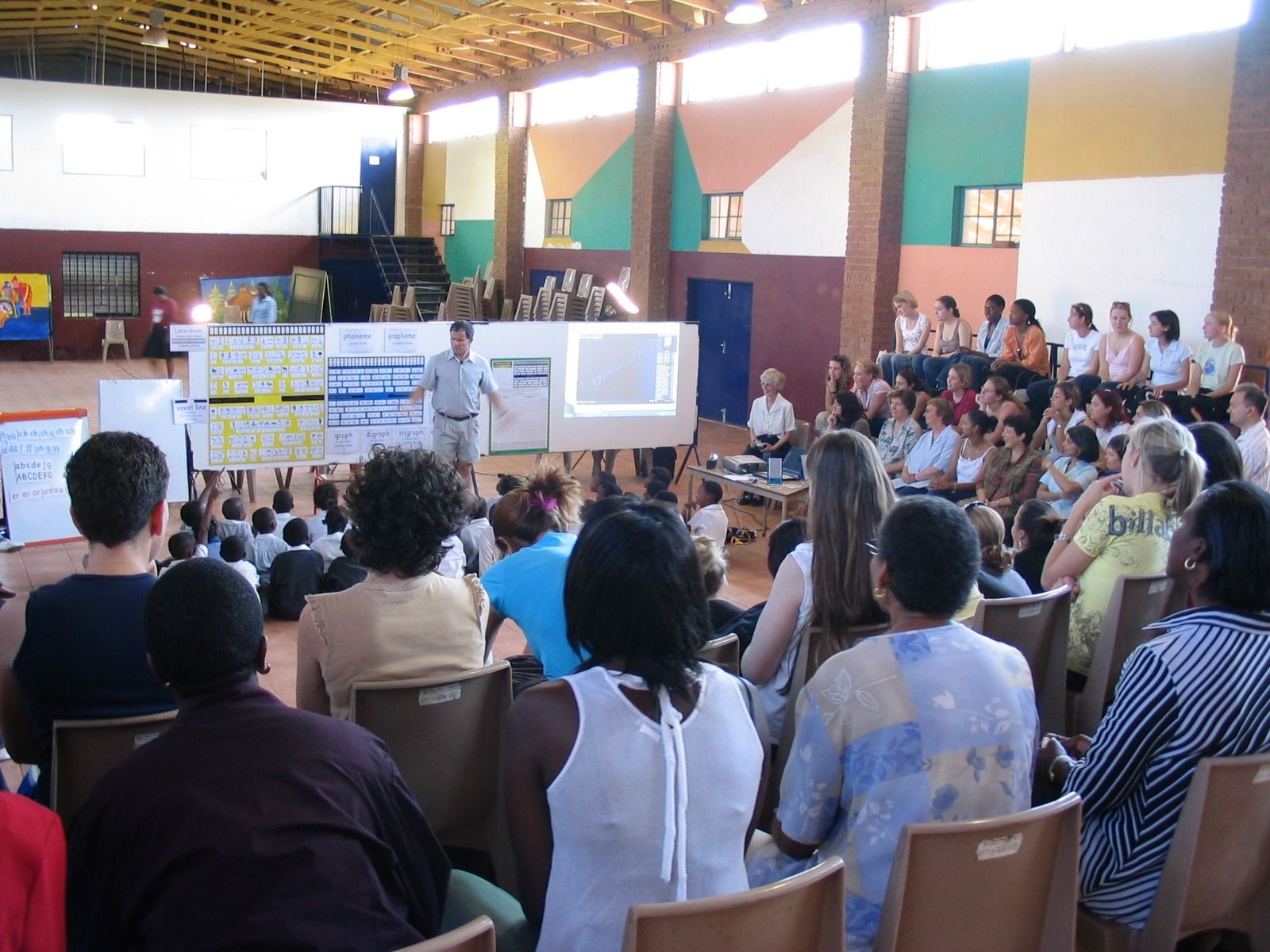
From 2005, the development of courses and resources was managed within two territories: THRASS UK, overseen by Alan and Hilary Davies, and THRASS Australia, overseen by Denyse and Ian Ritchie. Training and the development of teaching materials continued within each territory, reaching teachers and learners in many countries.

A continuing international story.
Since those early years, THRASS has grown internationally, with its use extending across mainstream classrooms, early intervention, English language teaching, learning support and adult education. The range of resources has grown too, from charts and teacher guides to books, software, songs and videos. The acronym has also been updated to reflect the range of English language skills THRASS supports: Teaching Handwriting, Reading, Articulation & Spelling Skills.
As THRASS continues to adapt to a changing educational landscape, its original purpose remains the same: through fun and engaging education about the 44 speech sounds and their written representations, the English language can be unlocked to open up opportunities for learning, giving learners greater confidence in reading, writing and spelling.